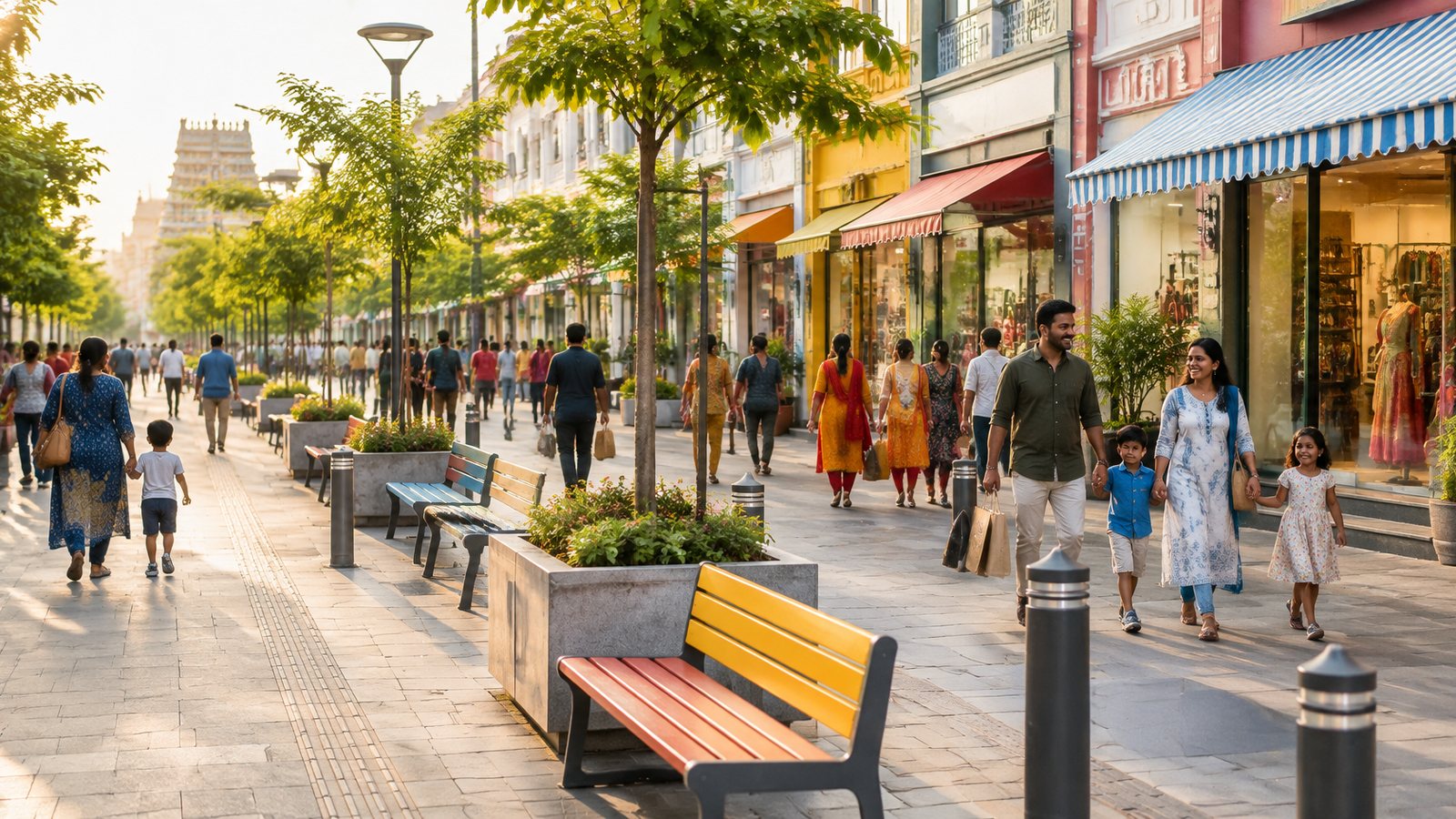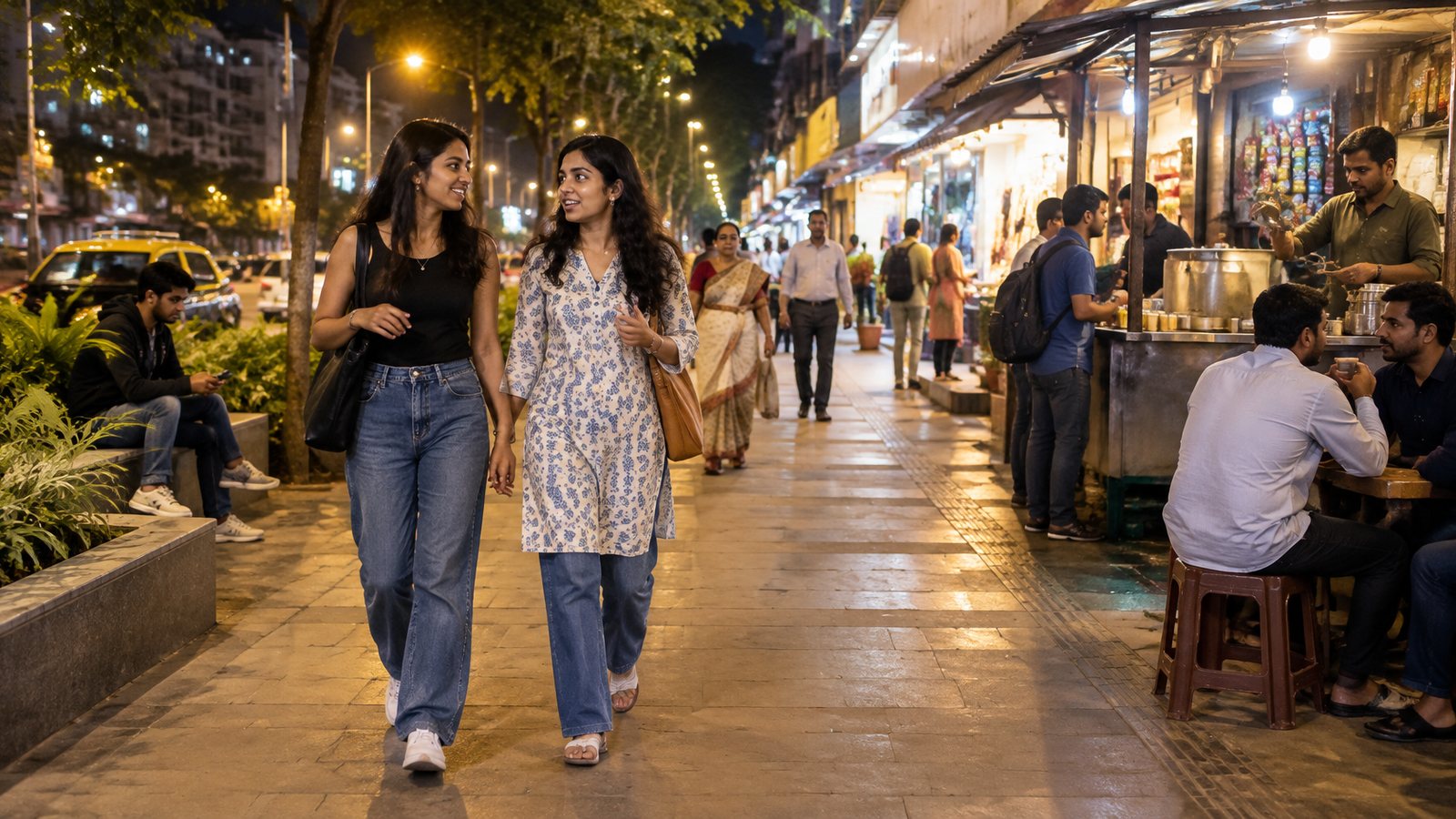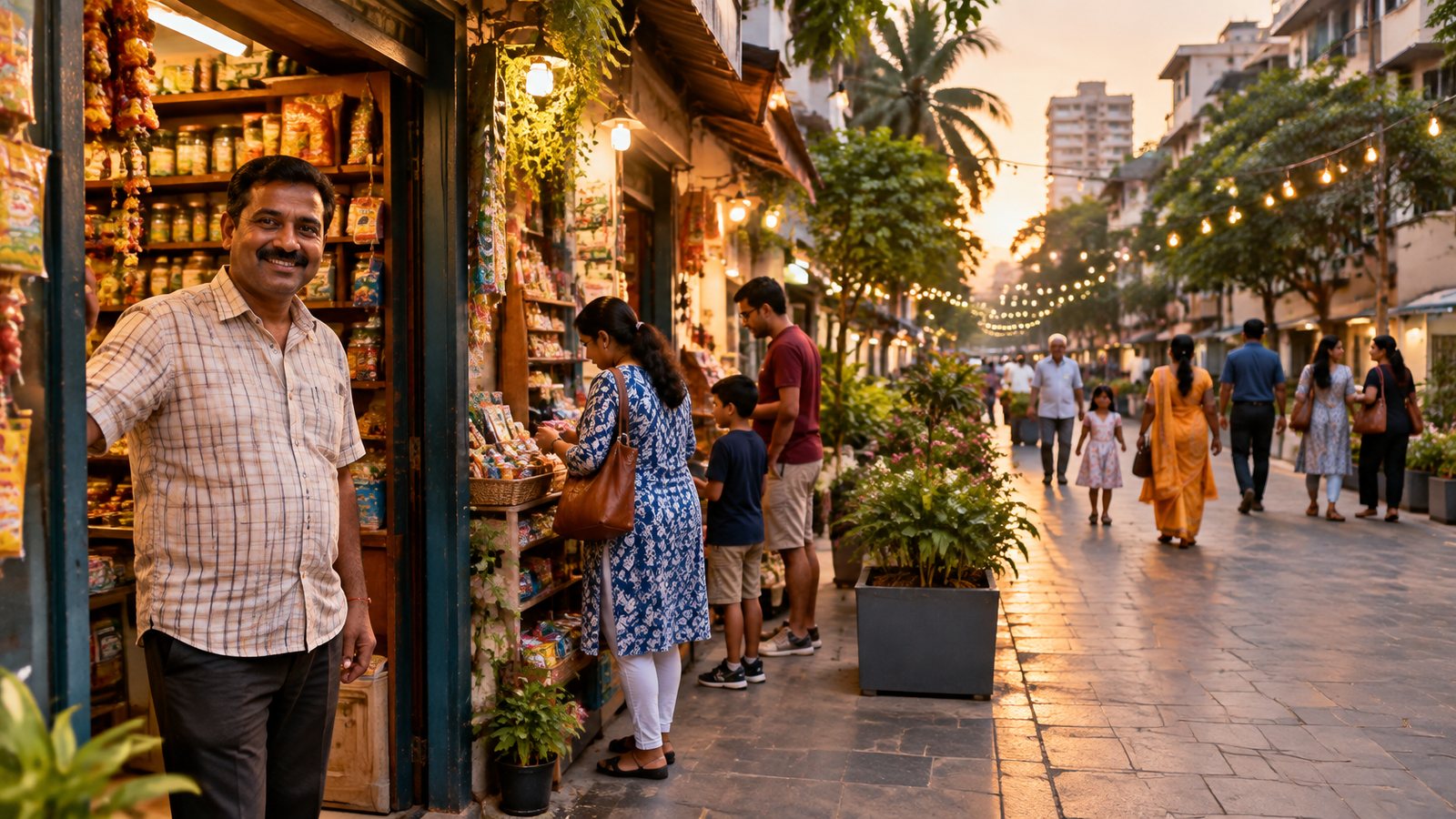
Every shopkeeper knows the rush of Diwali sales and the dull afternoons of the monsoon. What many don't count is the silent customer who never stopped — because the footpath was broken, the corner smelled, there was nowhere to stand, or a bike was parked across the step.
Your shop does not end at your shutter. For a customer, the street outside is your shop.
What the numbers say
- Chennai, Pondy Bazaar: after the street was rebuilt for walking, shop owners reported sales up 15–20% compared with the same months in earlier years.
- India-wide study: ITDP's Healthy Street Dividend found shopkeeper turnover about 20% higher on pedestrian-friendly streets than on similar ordinary roads, with about 36% more people walking past. Vendors who moved to such streets reported sales up by about half.
- New York: a 2013 study for the city's Department of Transportation found that after pedestrian improvements at one Manhattan junction, local retail sales rose 48% — faster than the Manhattan average.
The pattern repeats across very different cities: people who walk, shop. They notice windows, stop on impulse, and come back.
Car drivers pass your shop. Walkers enter it.— MIB Stories
What a beautiful street gives a shop
- Longer visits. Shade, seating and a clean footpath keep people on the street longer, and longer means more buying.
- Better customers. Families, women and older people avoid stressful streets. Make it comfortable and they return.
- Free marketing. A street with beautiful walls, lights and plants becomes a selfie spot. Every photo is an advertisement you didn't pay for.
- Fewer daily headaches. A fixed waste point and clear parking mean less garbage at your step and fewer arguments with bikers.
- A name for the street. People say "let's go to that lane" — and your shop is on it.
"But I'll lose parking in front of my shop"
This is the most common worry, and it was the biggest fear at Pondy Bazaar too. What usually happens is that parking moves a few metres, into organised bays, and footfall goes up. Very few of your customers ever found a spot right at your door anyway.
Why shops should join a Street Pledge
In the MIB Street Pledge, shops pledge alongside homes. Shops share the budget, and in return they get a say in the design: where the waste point goes, how deliveries work, where your board and lights can sit. A street designed with its shopkeepers works far better than one designed around them.
Talk to the shops on either side of you this week. Three shops together can start a street.
Sources
- Chennai's Pondy Bazaar pedestrian plaza — C40 Cities case study
- Walkable streets boost business, improve safety on Pondy Bazaar: study (ITDP "The Healthy Street Dividend") — DT Next
- NYC DOT: The Economic Benefits of Sustainable Streets, press release 2013
Pictures on this page are illustrations and MIB design visions, not photographs of the places named.