Ask anyone over 40 about their childhood and the street comes up within a minute. Gully cricket with a plastic bat. Kho-kho in the evening. Cycles, marbles, festivals, friends shouting your name from below the window.
Now look outside your building. The street is full of parked cars, fast bikes and broken edges. Children are taken from home to school to class in vehicles, and then indoors. Many city children today rarely just play outside.
The street is the closest open space we have
Most Indian neighbourhoods will never get a new park. Land is too expensive. But every one of them already has a street. If a part of it is made safe and pleasant, it becomes the nearest playground for every child who lives on it — no car, no fees, no appointment.
A street that is safe for a child is a street that is good for everyone.— MIB Stories
What a child-friendly street looks like
- Slow vehicles. Speed tables, narrower driving lanes and clear "play street" signs at the entry.
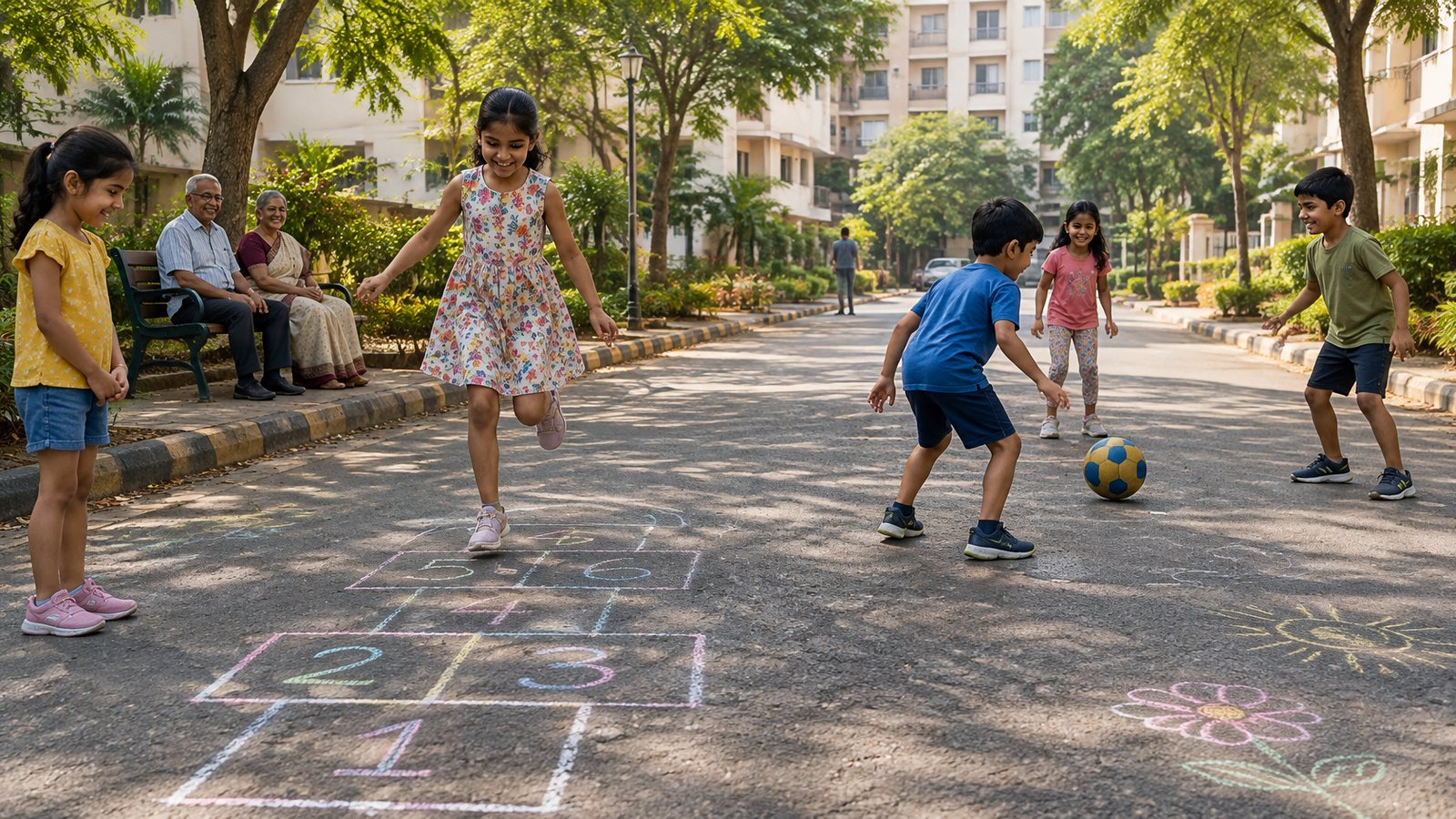
- A play corner. Even a small space with hopscotch painted on the ground, a few climbing shapes, or a sand patch.
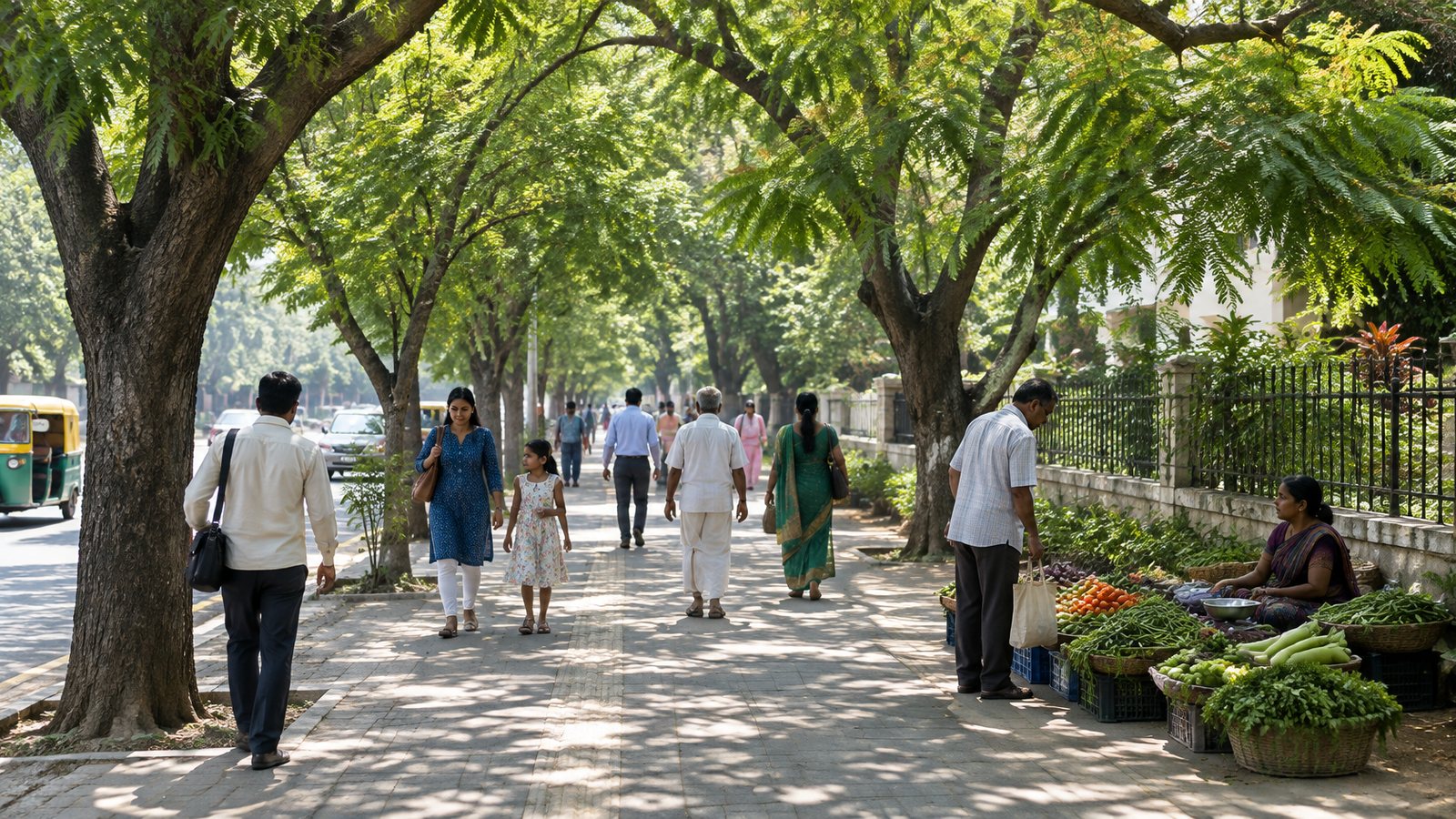
- Shade and seating. Trees for children, benches for the grandparents who watch them.
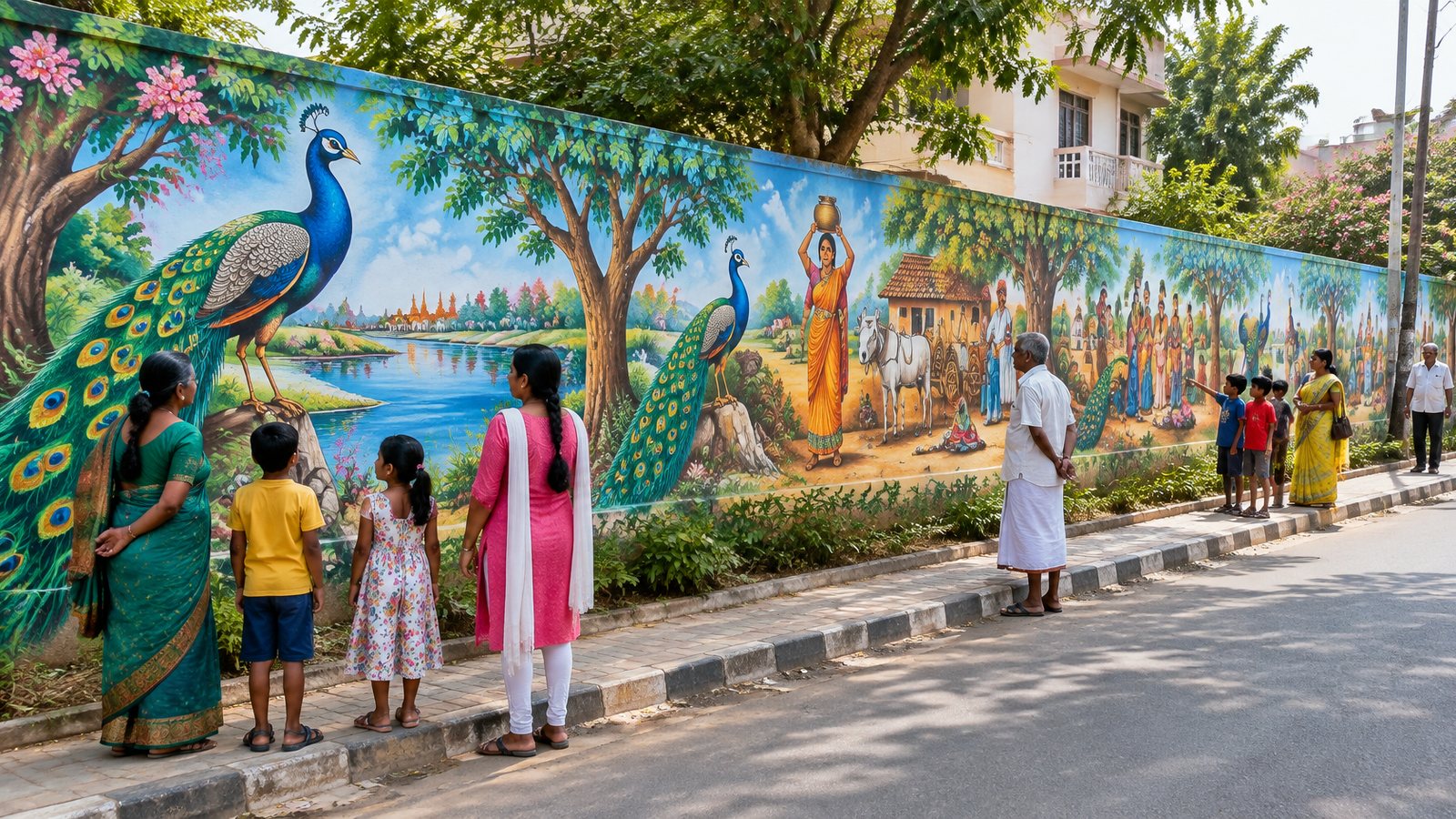
- Colour and art. Walls painted with children, by children — they take pride in what they made.
- Safe edges. Covered drains, no sharp grills, a level surface.
When Chennai rebuilt Pondy Bazaar for people, it added child-friendly play equipment — and reports say children play there longer. A busy shopping street became a place families linger.
Try a "play street" Sunday
Many cities around the world close a residential street to traffic for a few hours each week so children can play. Your society or street can try something similar on a quiet Sunday morning, with your local police and ward office informed. Bring chalk, balls, a few chairs and a speaker. Then watch who comes out.
That morning will tell you more about what your street could be than any drawing. And when your neighbours have seen it, they will be ready to make it permanent.
The best Street Captains are often parents
If you want your child to grow up with a street, not just a screen, start a Street Pledge. Tell the designer one thing first: "We want our children to play here." Everything else follows from that.
Sources
Pictures on this page are illustrations and MIB design visions, not photographs of the places named.