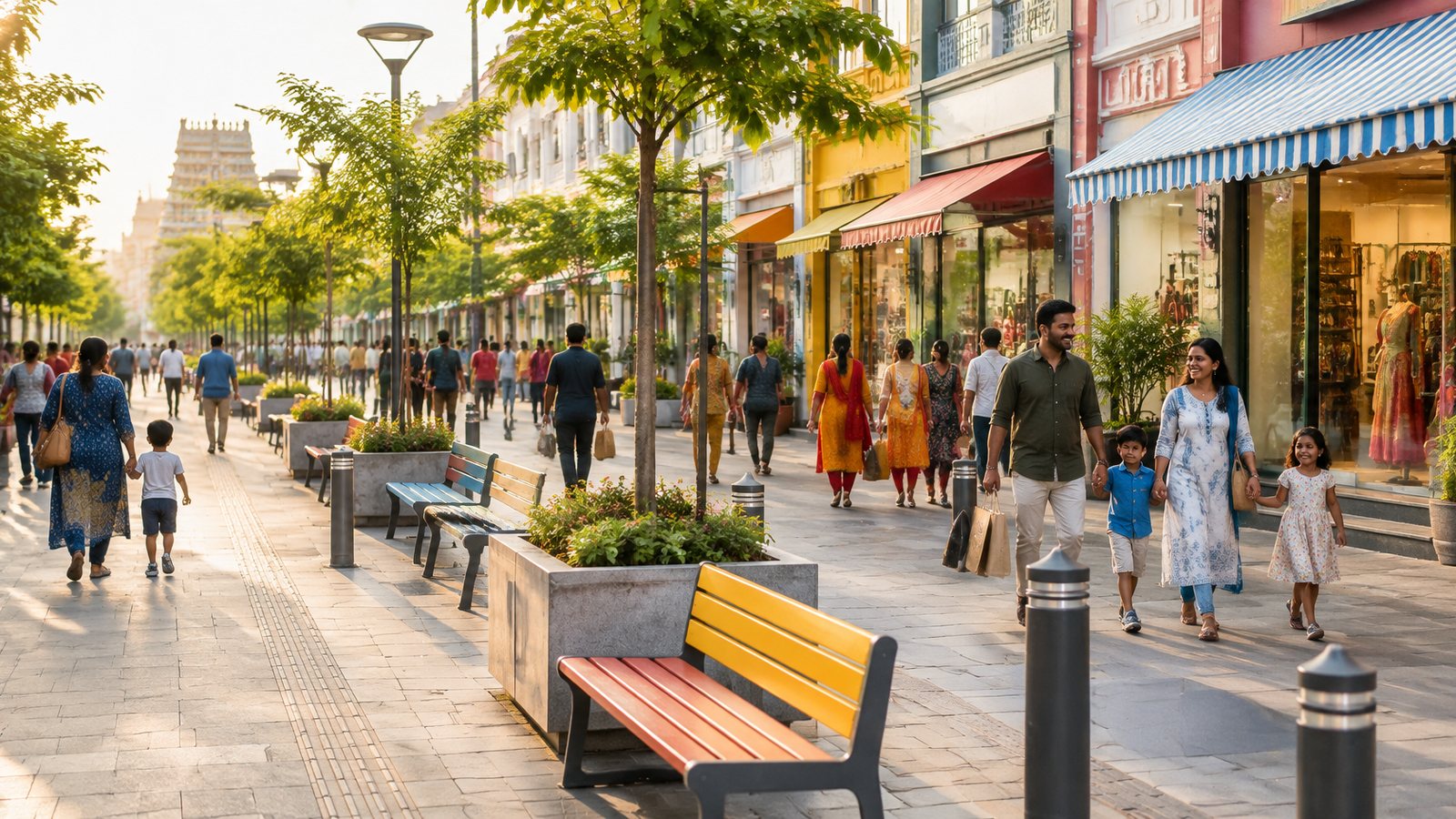
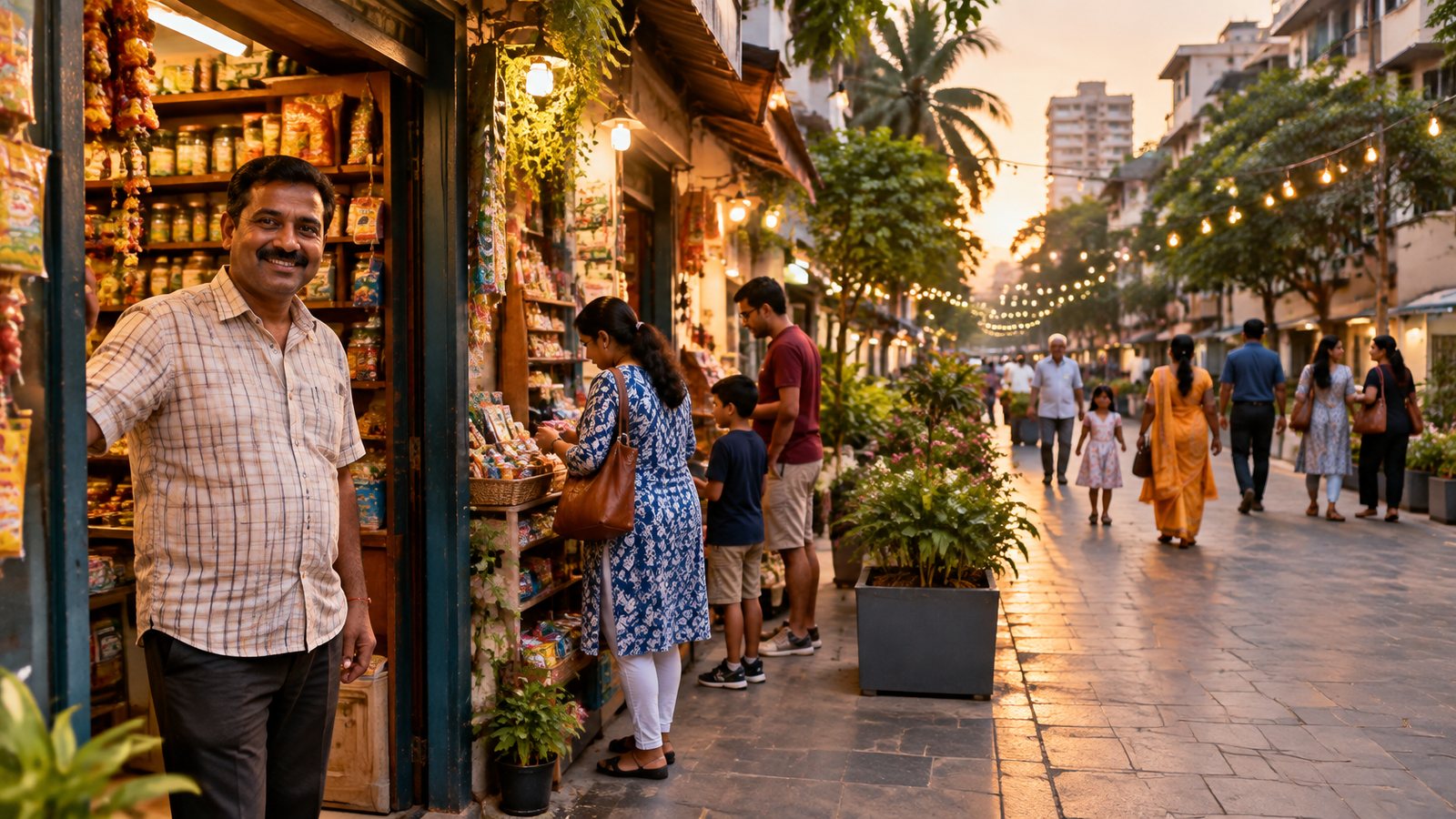
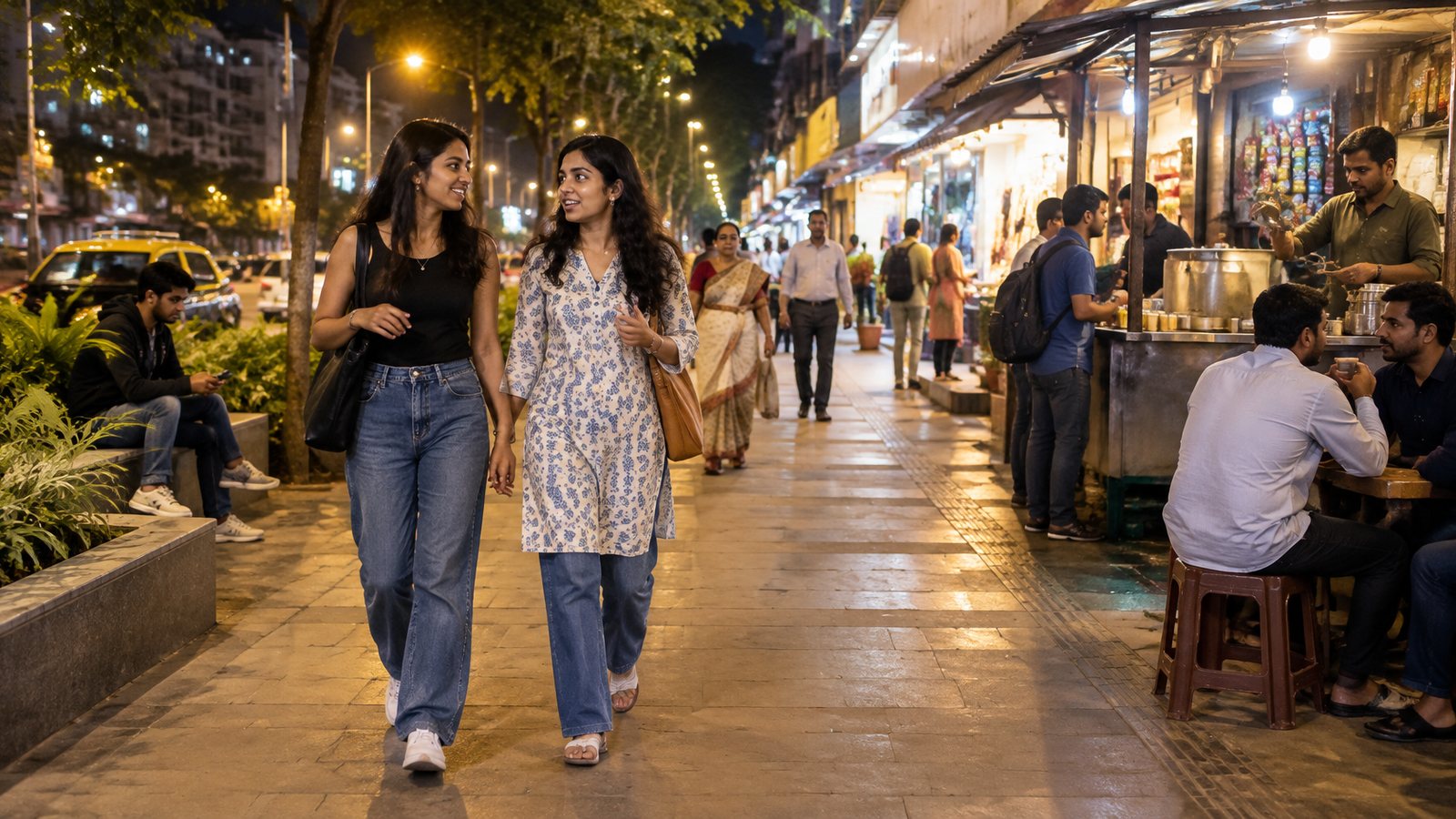
Is India the dirtiest country in the world? No single fair measure says so. India does have serious waste and pollution problems on its streets, rivers and public spaces — but Indian homes, temples and many cities are kept spotless. The difference is not the people; it is that our shared spaces are rarely designed for waste, walking or care. Indore, ranked India's cleanest city eight years in a row, shows that the same people with a better system get a clean city.
Scroll for five minutes and you will meet it. A foreign travel vlogger stops strangers on a street and asks, "Which is the dirtiest country in the world?" Someone says "India", the clip gets millions of views, and the comments turn into a fight. Some of us feel ashamed. Some of us get angry. Very few of us feel we can do anything about it.
Then the other kind of clip appears: a young man wading into a dead lake with a sack, alone. A group of college students scrubbing a wall under a flyover. A spiritual teacher asking, calmly, why the same Indian who never drops a wrapper abroad throws one out of the car window back home.
India has started talking about how our country looks. That is good news. But we are asking the wrong question.
The question isn't "Is India dirty?"
"Dirty" makes it sound like a character flaw — as if 140 crore people were born messy. That is not true, and every one of us knows it. Walk into almost any Indian home and it is swept every single morning. Our temples, gurdwaras and mosques are spotless. The floor of a Mumbai local station at 4 a.m., after the sweepers have gone through, is cleaner than many stations abroad.
We are a deeply clean people inside our own walls. The problem starts at the gate — on the street, the lane, the market, the lake shore. The space that belongs to everyone, and so, it feels, to no one.
India isn't dirty. It's undesigned.— The idea Mission India Beautification is built on
What the "clean abroad, messy at home" puzzle tells us
Acharya Prashant, in a talk that has been doing the rounds on social media, points to something we have all seen: the same Indians who are careful in public abroad often slip back into old habits at home. His explanation is blunt — it is less about our inner character and more about "the rules, regulations, the fear, the greed, the enforcement" around us. Change the environment, and behaviour follows.
He also makes a sharper point that is worth hearing: a place that looks clean is not automatically clean. Rich countries burn far more fuel per person and send their waste out of sight. Real cleanliness, in his words, is about not being in a violent relationship with your surroundings — not just about what the camera sees.
Both points lead to the same place. Behaviour in public is shaped by the space and the system around it. So if we want different behaviour, we have to build a different street.
Five reasons our streets look the way they do
When MIB designers do a Space Audit of an ordinary Indian street, the same five gaps show up almost every time. None of them is about people being "dirty".
- There is no place for waste. No bins at the corner, no dry and wet points, no fixed pickup time that people can trust. Waste goes where there is space — the corner, the drain, the empty plot.
- There is no place for life. Vendors, autos, two-wheelers, delivery bikes and walkers all fight for the same strip of road. Nothing was planned for them, so everything spills.
- Nobody owns the street. The municipality cleans it, but nobody looks after it. Residents see it as "outside", shopkeepers see it as the municipality's job.
- Cleaning is an event, not a system. A drive happens, photos are taken, and in three weeks the corner is back. Without care after the clean-up, the street always wins.
- Ugliness invites more ugliness. A broken footpath, a stained wall, a pile of debris quietly tell everyone, "nobody cares here". A beautiful, cared-for spot sends the opposite signal — and people respect it.
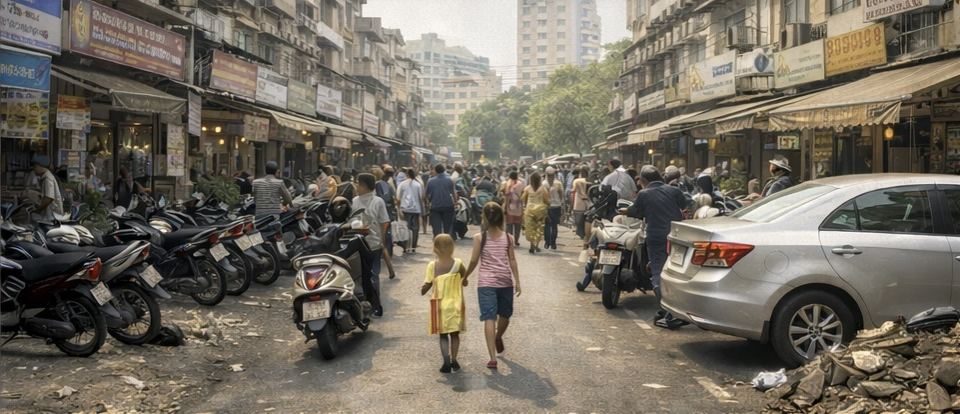 Today
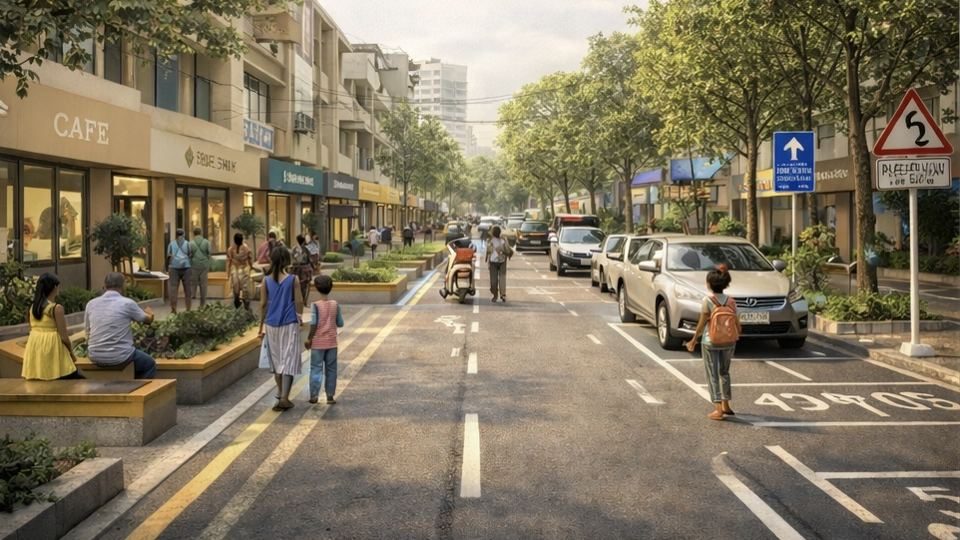 Designed
The proof is already in India
If Indians were simply "dirty", no Indian city could ever become clean. But one did — and kept doing it. Indore was ranked India's cleanest city in the government's Swachh Survekshan for eight years in a row. In the 2024-25 survey, Indore, Surat, Navi Mumbai and Vijayawada were moved into a new "Super Swachh League" for cities that have stayed at the top, and Ahmedabad was named the cleanest big city.
Indore did not get new citizens. It got a system: door-to-door collection, segregation at source, a city that made cleanliness part of its pride — and people who decided it was their city. That is the whole lesson in one line. Same people, different system, different city.
- Indians are clean at home. The problem is the shared space that nobody owns.
- Behaviour follows design, systems and care — not nationality.
- Indore proves an Indian city can become, and stay, clean.
- The fix is design + ownership + care, one street at a time.
So what is the right question?
The right question is: who will design my street, and who will look after it?
That is the question Mission India Beautification exists to answer. We bring architects, designers and artists into everyday spaces — homes, shops, streets, markets and villages — and the MIB Care Team keeps them clean, green and usable for years after the photos are taken.
And the most powerful answer to "who will look after it?" is the simplest one: the people who live there. That is why we built the Street Pledge, where residents adopt their own street. When half the homes on a street say yes, an MIB designer plans it, we share the exact budget, and the ward permission is prepared for you.
The next time someone asks "Is India the dirtiest country?", let's not argue in the comments. Let's send them a photo of our street — after.
Sources
- The West would not look clean if CO2 had a colour — Acharya Prashant
- Ahmedabad cleanest city; Indore moved to Super Swachh League — The Week / PTI, 17 July 2025
- Swachh Survekshan 2025: Indore cleanest city for 8th time — Testbook
Pictures on this page are illustrations and MIB design visions, not photographs of the places named.